
Marxist Dictionary
Marxist concepts defined from the historical experience of the working class, by the School of Marxism.
This dictionary gathers the concepts we use in our texts and seminars as the tradition of the Communist Left understands them: each entry opens with a short definition and continues with its history, its uses and the debates around it. Entries link to one another and to the educational notebooks and the historical archive of the School of Marxism. There is a Spanish edition.
A
 Absolute surplus value
- Total amount of value extracted from labor power. The increase in surplus value in absolute terms occurs through a reduction in the hourly wage or an unpaid increase in working time.
 Academic marxism
- An academic current that defines Marxism as a "method of analysis" that can be developed outside of the class struggle.
 Accumulation of capital
- Cycle in which 1. labor power is exploited, producing surplus value; 2. surplus value is realized in the market for goods and services; 3. the result of exploitation is distributed in the form of profit in the capital market, in order finally... 4. to be reincorporated into production as expanded capital.
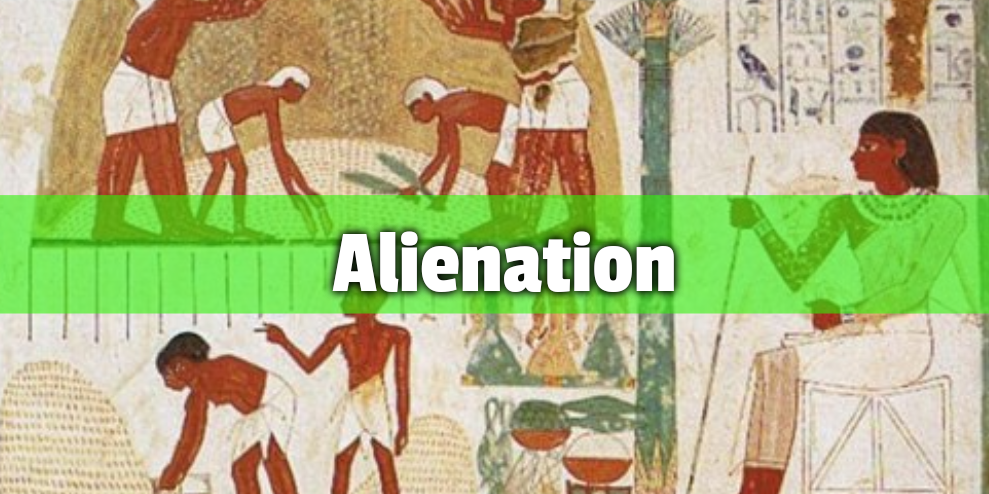 Alienation
- A fracture, due to historically specific social relations, between the self-consciousness of the species and its own needs and nature. Alienation is a product of the division of humanity into classes which makes humanity appear to be opposed to the result of its labor and therefore opposed both to itself and to Nature as a whole.
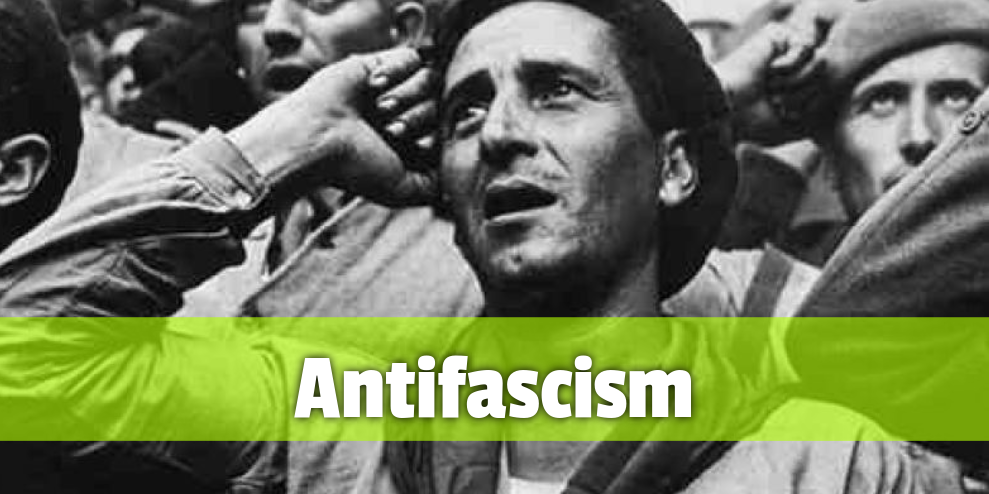 Anti-fascism
- Stalinist policy that conceals the defense of the capitalist order and the alliance with a part of the bourgeoisie under the supposed need to defeat "first" the counterrevolution in its fascist form.
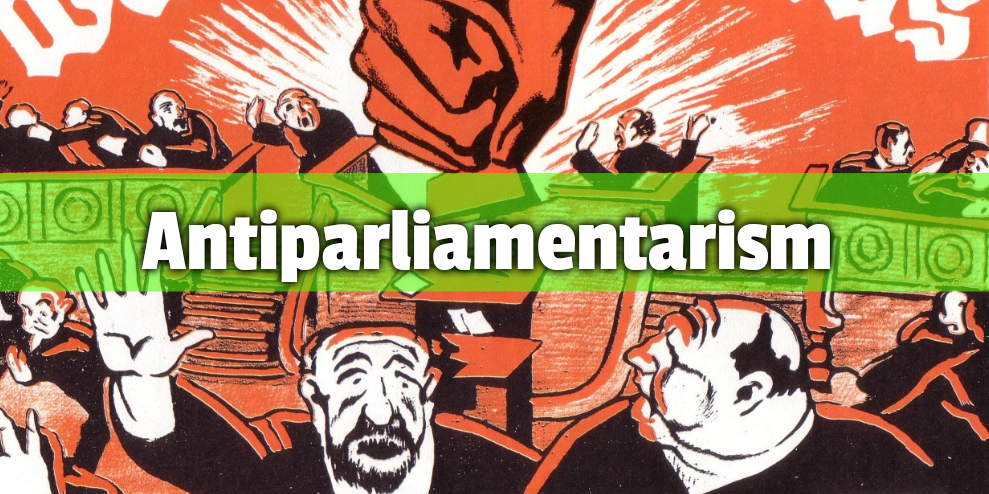 Anti-parliamentarianism
- A tactic that upholds the counterproductive character of attempting today an electoral participation similar to that of the social democratic parties during the rising phase of capitalism.
 Asiatic mode of production
- Mode of production based on the collective exploitation of the peasantry articulated by a bureaucratic state by means of a system of tributes levied in produce and labor time. The peasantry retains remnants of tribal organization and the communal ownership of land, but local and tribal particularities tend to be blurred by the impact of large public works which increase productivity and homogenize the organization of social labor.
B
 Bourgeoisie
- The exploiting class of the capitalist mode of production that organizes and directs the process of surplus value production and capital accumulation.
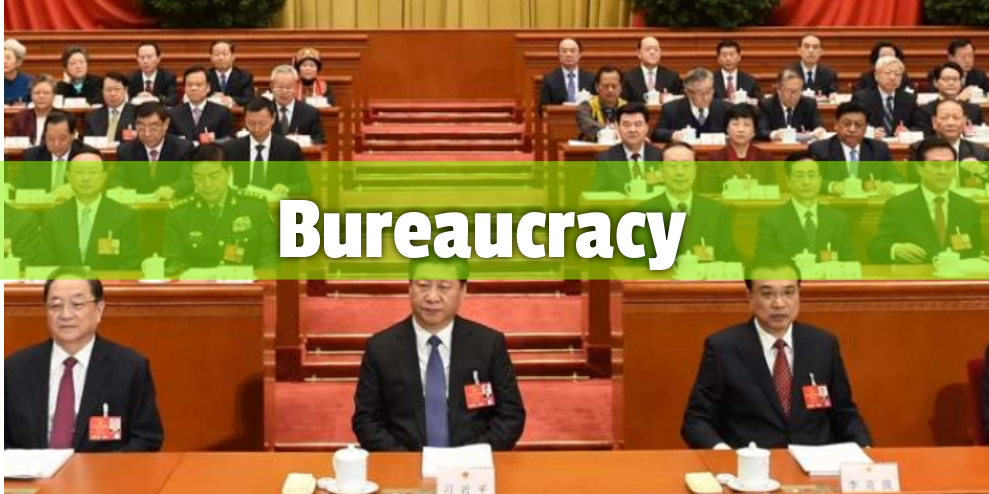 Bureaucracy
- Bourgeois layer dedicated to the management of the state apparatus
C
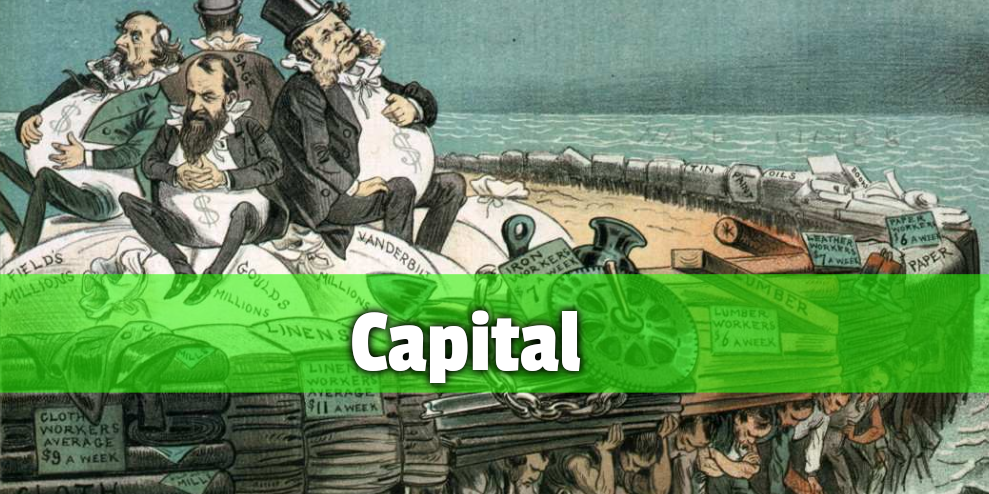 Capital
- Capital is an accumulable right of exploitation that guarantees its holder the use of a certain amount of social resources and hours of labor. Its system of circulation and accumulation ensures that those applications that contribute most to the increase in overall unpaid labor dispose of a greater proportion of resources and labor to exploit in each cycle.
 Capitalism
- A mode of production based on the commodification of human labor and its products, whose specific objective is the production of surplus value, that is, the extraction of surplus labor that generates an increase, in constant terms, in the mass of money returning to the balance sheet of the owners of capital at the end of each production cycle.
 Centralism
- Tendency towards an organizational unification which expresses the character of the proletariat as a universal class.
 Centrism
- A political position, impeccable in its literal wording, that is stated in a consciously ambiguous way, allowing a slide in practice towards positions that, without requiring any new statement, nevertheless fall outside the class boundaries (internationalism, centralism).
 Class
Class- Each of the social groups defined by the productive relations prevailing in a given society.
 Class boundaries
- Basic political positions that express the nature of the proletariat as a universal class and whose negation means the passage of a tendency or method of analysis to the opposite class camp.
 Class consciousness
- Knowledge and affirmation of the ultimate needs and possibilities historically open to the revolutionary class and of the means necessary to realize them.
 Class struggle
- The class struggle is the conflict that develops within every mode of production based on exploitation and therefore on class division. It informs all the ideological expressions of an era, shapes the state and drives its transformation or collapse.
 Collectivities
- Collectivities was the name given in Spanish, until the Spanish Revolution, to cooperatives - both producers' and consumers' - and communally run holdings set up by workers. During the Revolution the term was extended to the organizations that spontaneously organized the production and distribution of goods in an attempt to supply the militias but, above all, to abolish wage labor from its base and to try out a productive metabolism centered on the direct satisfaction of human needs.
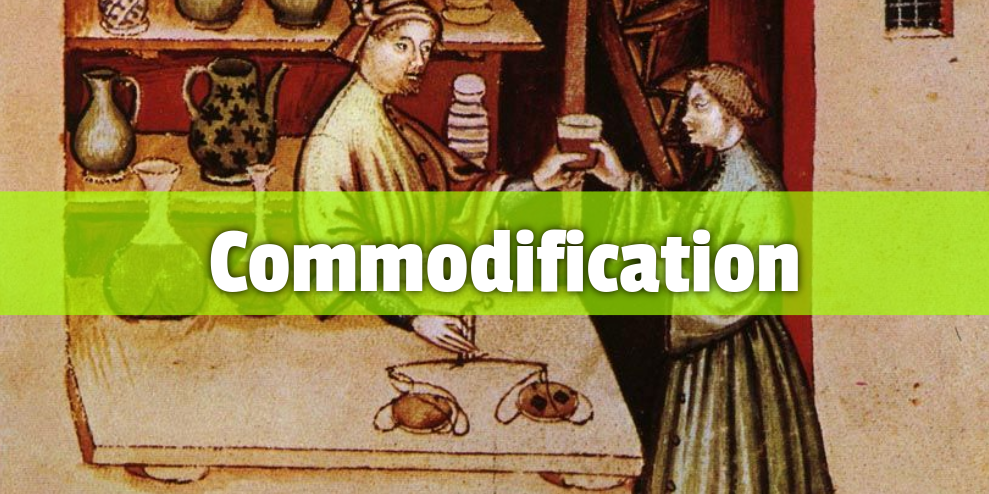 Commodification
- Historical process of market expansion through the transformation of social relations and the production of goods into commodities.
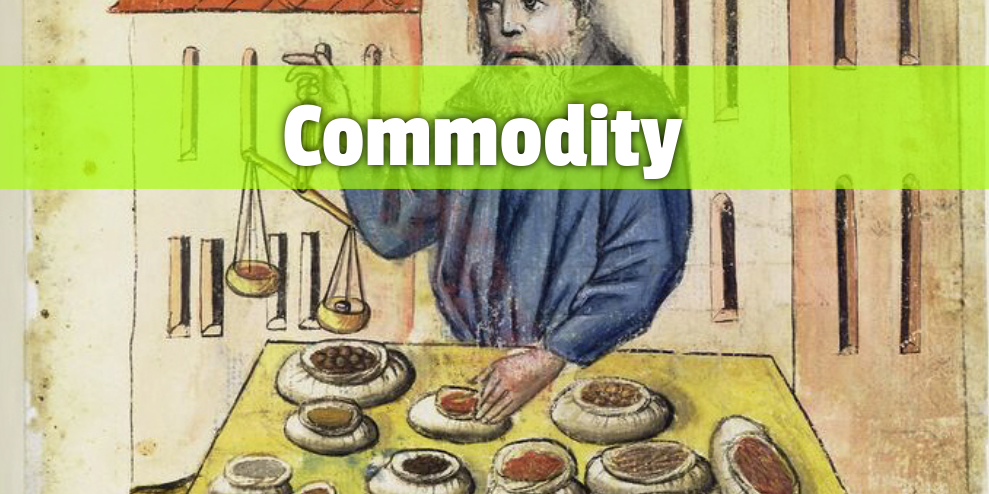 Commodity
- Any result of human labor that is produced in order to be exchanged on the market.
 Commodity fetishism
- "Spontaneous" representation of the social relations of production, which bind people and classes, in the form of relations between equivalent commodities, i.e. relations between social objects equalized in their exchange value.
 Communism
- Mode of production of a decommodified society where abundance is a reality, the state does not exist and social production is oriented, as its direct objective, towards the satisfaction of needs. In it labor and its products have already lost the condition of commodities, social classes have disappeared and with them the difference between leisure time and work, country and city, the division of labor and in general all the social divisions that reflect the fracture of exploitative societies.
 Communist left
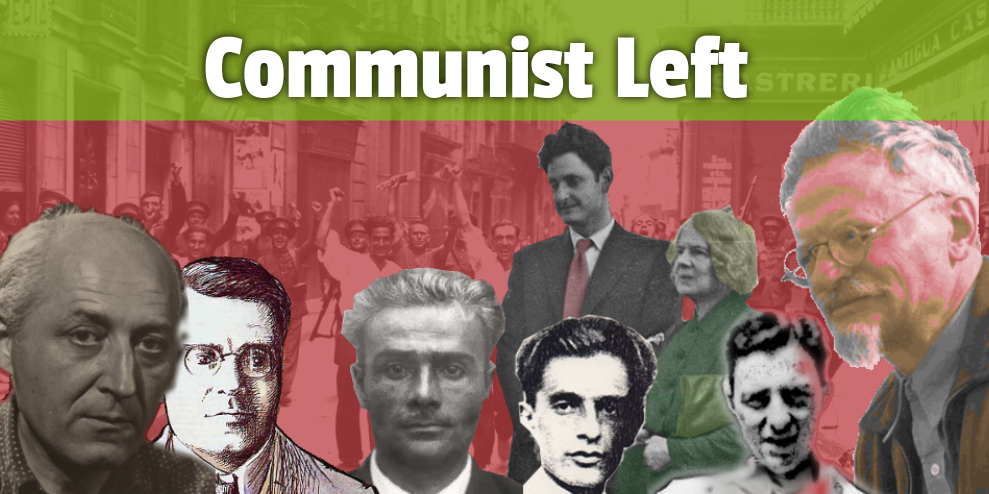
- Movement of the internationalists in struggle against the Stalinist degeneration of the Third International and against the defensist degeneration of the Fourth International from 1942 onwards.
 Communist morality
- The result, in forms of political and interpersonal relations and behavior, that living with the perspective and conviction that the abolition of scarcity, the commodity and wage labor through the action of the working class is as necessary as it is possible in the present time has for communists.
 Crisis of civilization
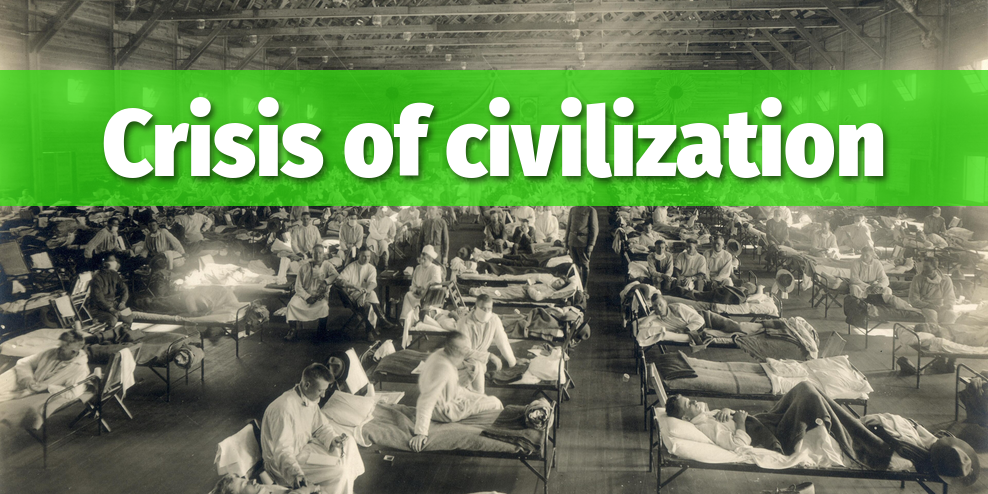
- We call crisis of civilization the constant element in the decadence of a mode of production: the contradiction between systemic growth and human development. This contradiction operates permanently throughout the whole period, regardless of whether crises and wars are more or less virulent or lasting, and only disappears when the mode of production is overcome.
 Culture
- A set of modes of behavior and of attribution of social meaning, including forms of representation and communication, which began to be understood as a unity with the birth of the national market.
D
 Decadence
- A mode of production enters a phase of historical decadence when the relations of production that characterize it cease to be forms of development of the productive forces and become obstacles to the free development of those same forces. Consequently, development and economic growth become dissociated.
 Defensism
- Invocation of the "right to national defense" to support the recruitment and slaughter of workers in defense of one national state - or aspiring state - against another.
 Democracy
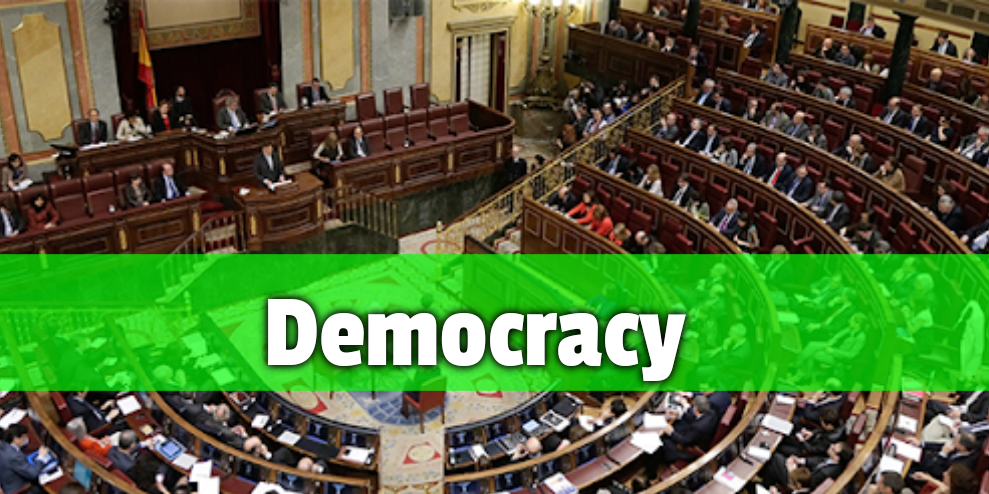
- Form of organization of the political apparatus of the bourgeois state that legitimizes itself by representing social conflict as a market -Parliament- in which the major currents of opinion -embodied in the parties- exchange interests under a set of rules that guarantees the survival and development of the state itself and of the nation it constitutes.
 Dialectics
- Conception of reality as a dynamic and complex system of densely interrelated parts.
 Dictatorship
- Rule of a particular interest over the whole political apparatus and through it over the social whole.
 Discrimination
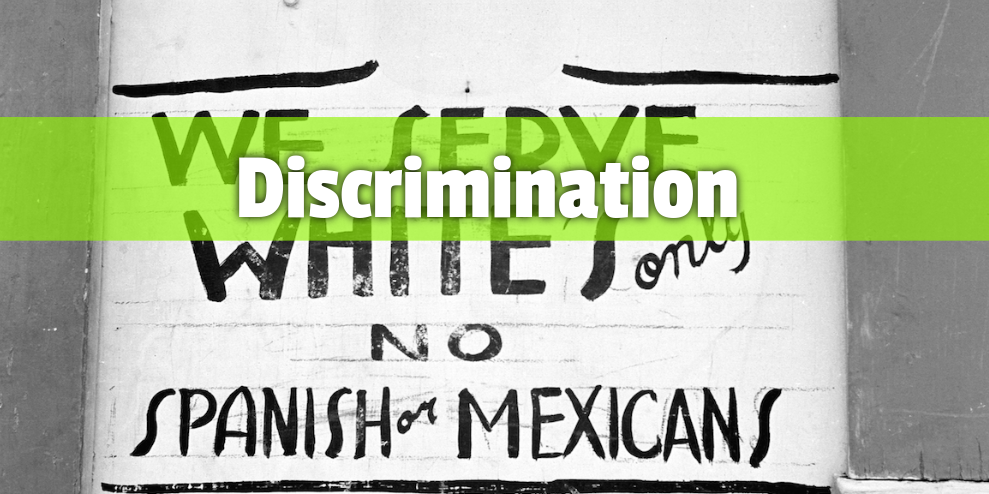
- Exclusion or differential treatment suffered by a person for displaying a set of arbitrary characteristics that are unrelated to whatever they are excluded from or which, when they are not, are attributed to them by association with a demographic profile as arbitrary as any other.
E
 Empiricism
- Theory that bases scientific knowledge on the separation between "objective" facts - supposedly external to thought - and "subjective" analysis, supposedly proper to the individual mind. As the subjective is individual, the universalization of results requires either a metaphysical confusion between the facts themselves and the concepts or categories with which they are described or in which they are grouped, or else accepting the impossibility of a theoretical universalization of empirical results without a prior approach to the totality.
 Environmentalism
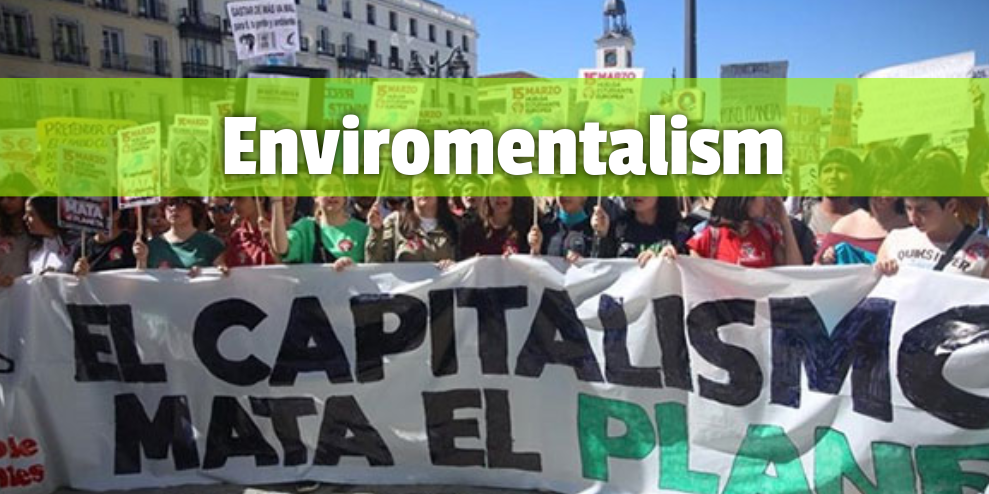
- Ideology that considers the main historical contradiction to be Humanity-Nature, or in certain versions, capitalism-Nature, proposing as an alternative a range of "reforms" that go from "green capitalism" to "degrowth".
 Exploitation
- Appropriation of the product of the labor of one social class by another.
F
 Fascism
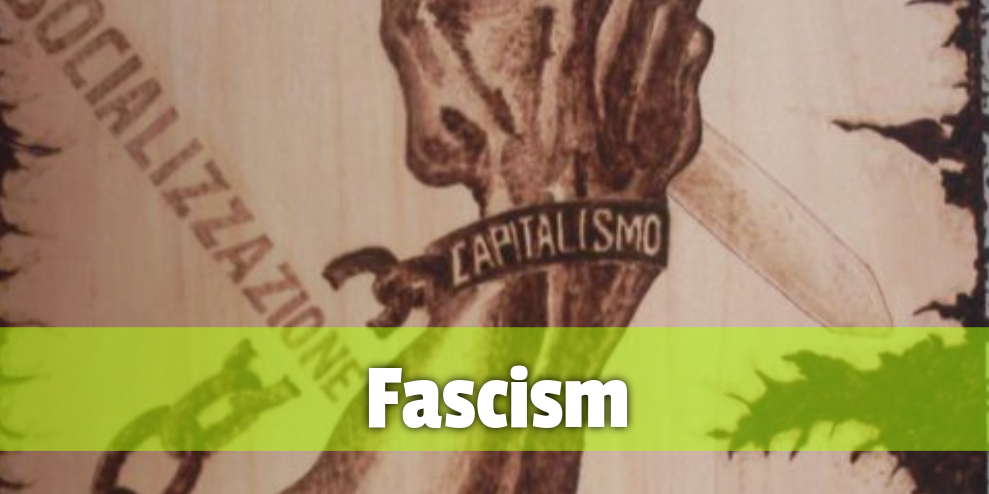
- Revolutionarist movement of the petty bourgeoisie that acts as the spearhead of the counterrevolution and whose historical mission is the destruction of the fabric of class organizations inherited from the Second International, replacing them with the forced regimentation of the workers in state capitalism through trade unions and institutions derived from or integrated into the political apparatus of the state.
 Feminism
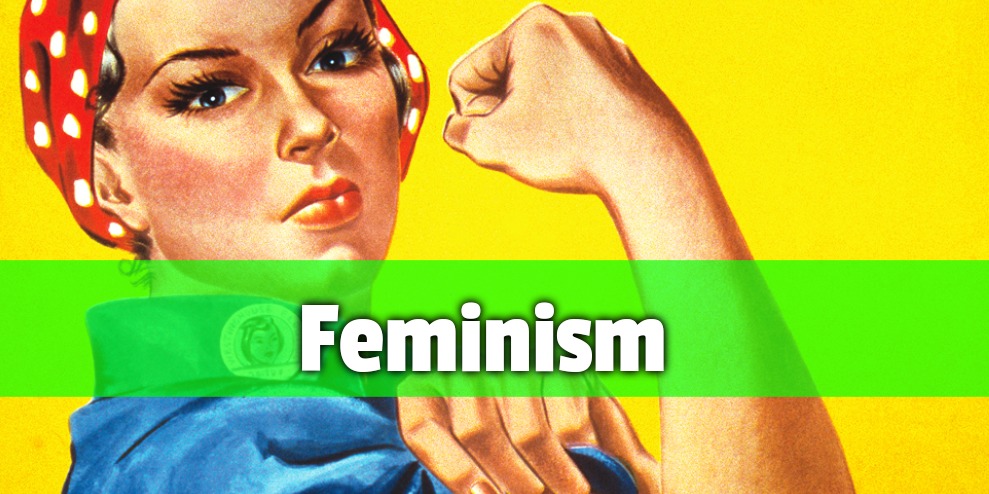
- Ideology that defends the existence of an interclassist historical and political subject, "women", which transcends social classes, with its own differentiated interests standing above the class struggle.
 Feudalism
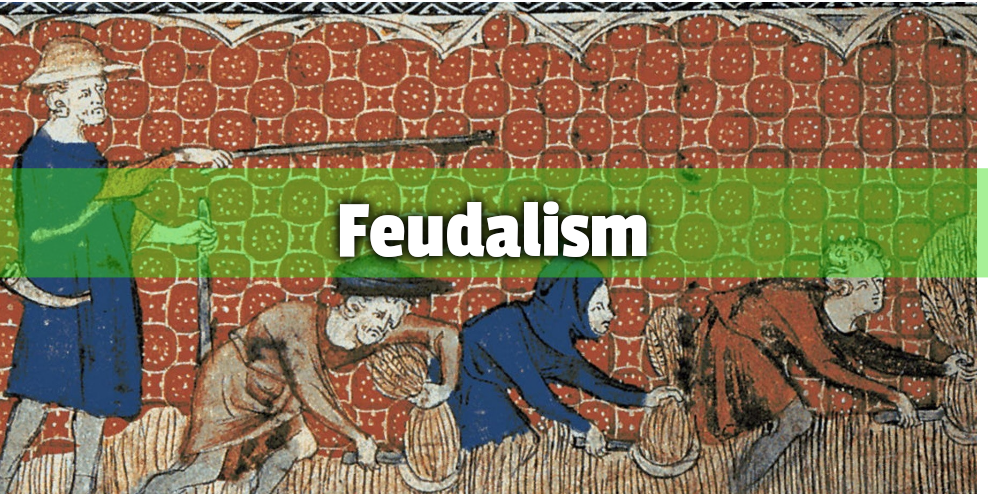
- Also known as the seigneurial regime. Mode of production based on the "seigneurial relation". The ruling class takes charge, on a family basis, of the exploitation of a territory and its inhabitants by virtue of a vow or pledge of vassalage which also orders and ranks the relations between the different layers and groups of the exploiting class.
 Fictitious capital
- Money capital that is not applied to production (of surplus value) but is reproduced parasitically in the form of a bet on the results of productive capital, a bet that will only give a positive overall result as long as the flow of fictitious capital towards speculative markets keeps growing.
 Finance capital
- Fusion of banking and industrial capital.
 Financialization
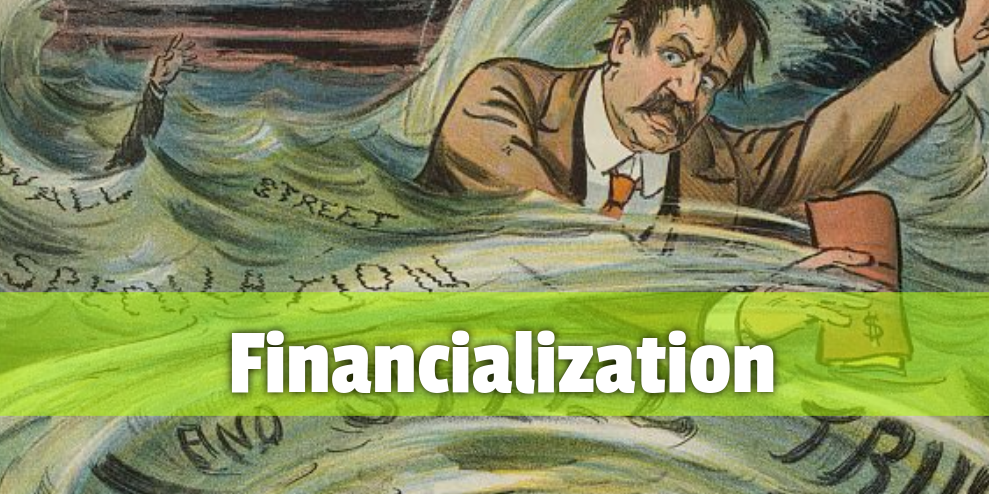
- Cyclical metastasis of fictitious capital that multiplies capitalist chaos in the allocation of productive resources, exponentially scales up "financial bubbles" and precedes the bursting of "crashes".
 Formal and real subsumption of labor under capital
- Phases through which capital first comes to direct and then to transform the labor process when it absorbs a pre-capitalist productive structure, moving from centring its growth on the increase of absolute surplus value to centring it on the growth of relative surplus value, revolutionizing the labor processes and the means of production to that end.
H
 Historical materialism
- Historical materialism is a set of premises for the analysis of social reality that explains historical phenomena on the basis of the social, material structure, of the social organization of production and the social relations that derive from it, that is, the mode of production in which they unfold. These modes of production are defined by certain social relations which, in turn, reflect and drive a certain development of the productive forces of society. This development and these conflicting relations materialize in struggles between the social classes they define, in the form of ideologies, parties and political clashes that express those contradictory interests and which, in turn, once a certain development of the productive forces of society has been reached, transform the whole social structure.
I
 Ideology
- Consciousness of social and historical reality, falsified and constrained by class interest. It has therefore existed since the split of society into classes. Only the appearance of a universal, exploited and revolutionary class generates the conditions that make possible its theoretical demolition -in its political expressions- and its practical demolition, in its revolutionary practice.
 Imperialism
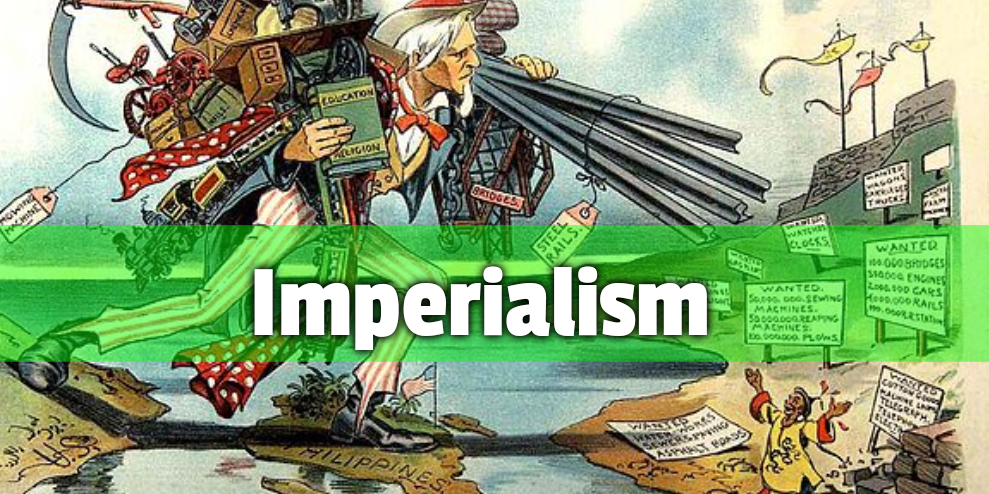
- Stage of capitalism as a global system that culminates its progressive development and plunges it into its historical phase of decadence, from which point capitalism goes from being a spur to being a fetter on the free development of the productive forces it has itself created.
 Individualism
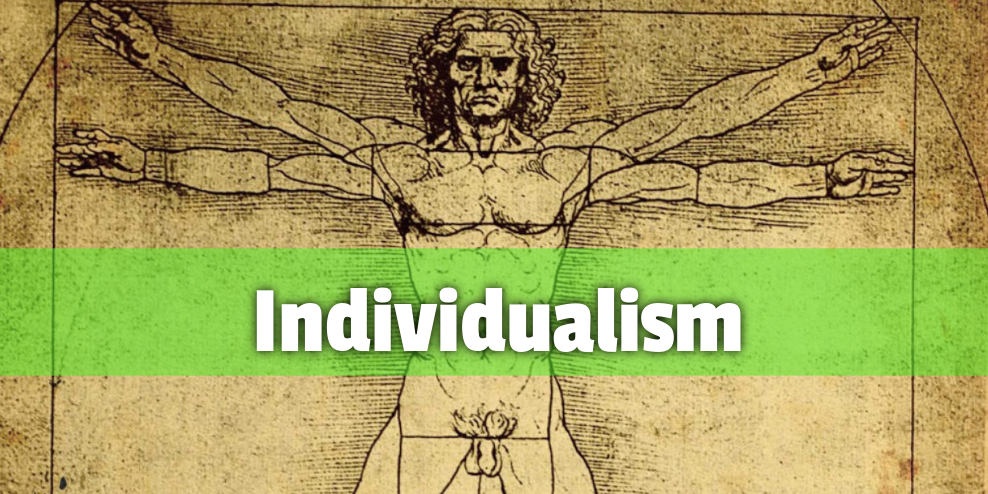
- Ideology that affirms that people, considered one by one, have a large degree of sovereignty that allows them to determine their own future and shape their social reality through their relationship with other individuals. The individual would therefore be ultimately responsible for his or her social situation and society would be explained as the result of the aggregation of individual behaviors, not of contradictions between social classes.
 Internationalism
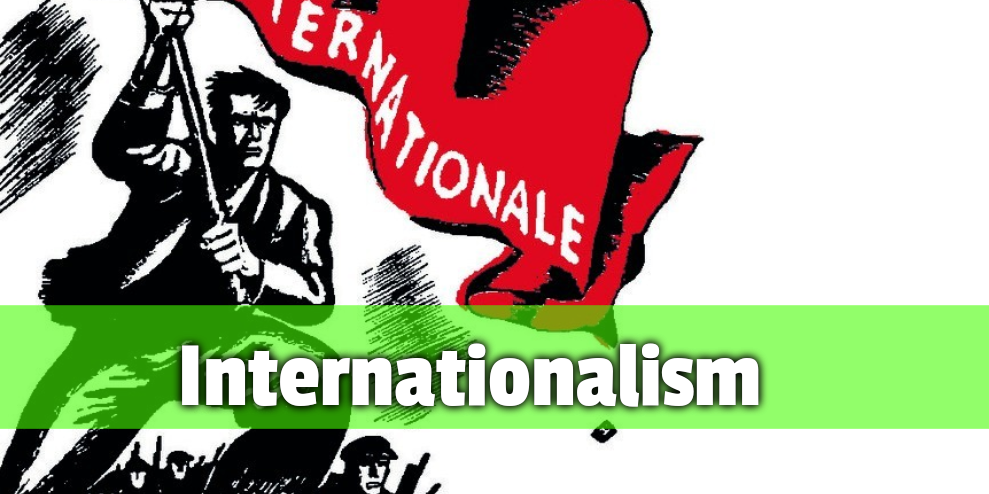
- Affirmation of the proletariat as a single world class in the face of global capitalism, with a single set of interests, tactics and strategy and with a project, socialism, which can only be realized globally.
J
 Juvenalism
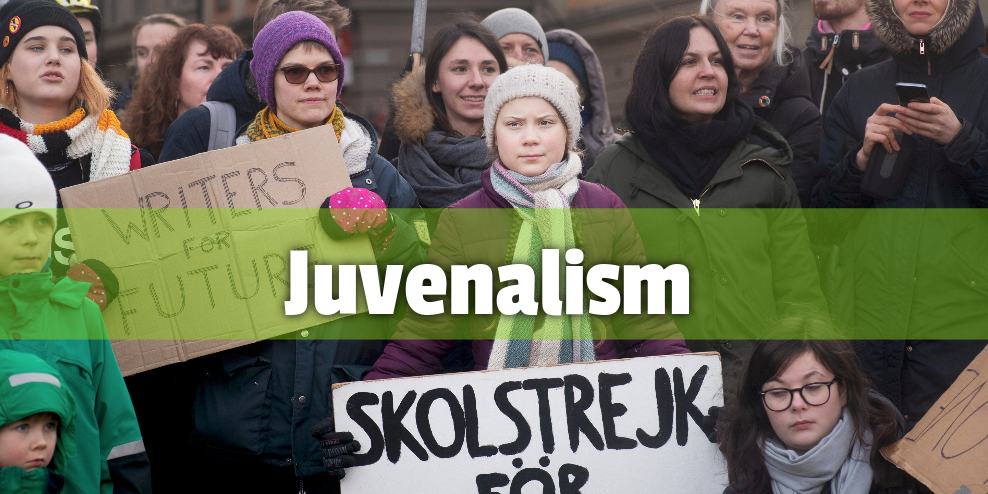
- Juvenalism is an ideology which claims that, in a situation of crisis and historical "emergency", young people are the best suited to provide direction because their ideas are "new" and are neither marked nor constrained by the weight of immediate interests. Young people would thus speak "in the name of the future".
L
 Labor
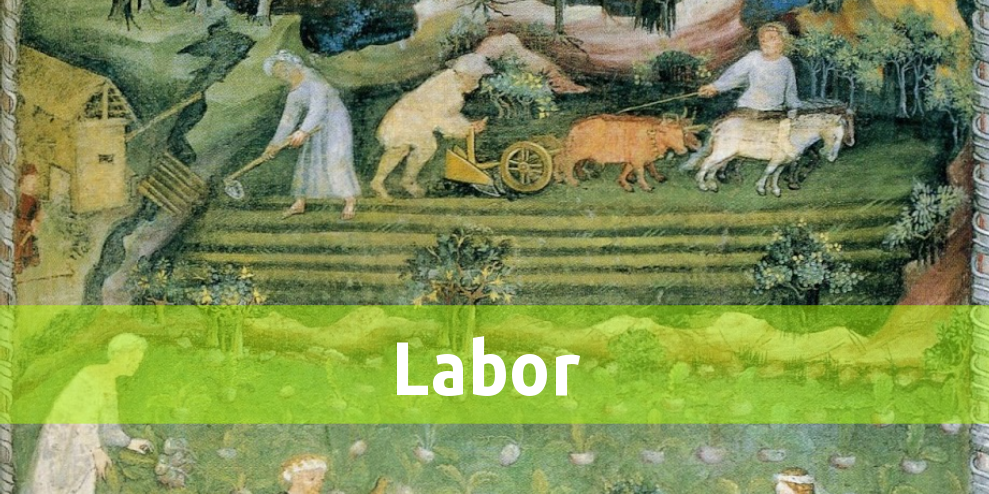
Labor- Conscious and deliberate activity by which the species transforms its environment.
 Labor power
- Set of physical and intellectual capacities that a person applies when generating use values in a productive process. Its sale for a certain time in the market as a commodity by those who cannot produce by themselves and have no other commodity to sell is the basic condition and institution of capitalism.
 Lumpenproletariat
- A mass of declassed people, excluded and set apart from the proletariat, which lives economically on illegal trafficking, the criminal economy, begging, state or private patronage, or a combination of all these.
M
 Mass strike
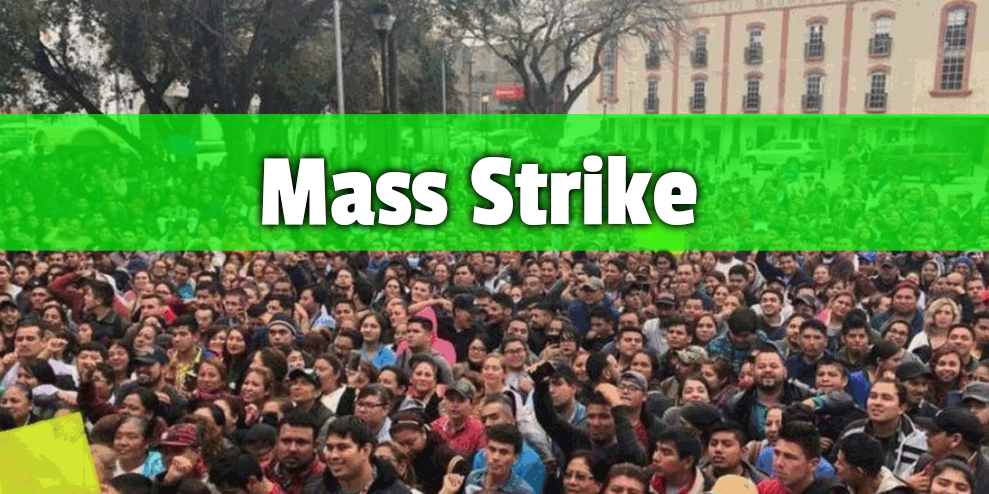
- A form of workers' struggle characteristic of decadent capitalism. It resolves the organization and massive self-affirmation of the workers by spreading spontaneously across the length and breadth of a territory, incorporating all workers regardless of trade, nationality, sex or any other division imposed by the organization of production or by the state.
 Maximalism
- A set of tendencies of different origins that identify with and give priority to what the Second International called the "maximum program", the abolition of the state and wage labor.
 Militarism
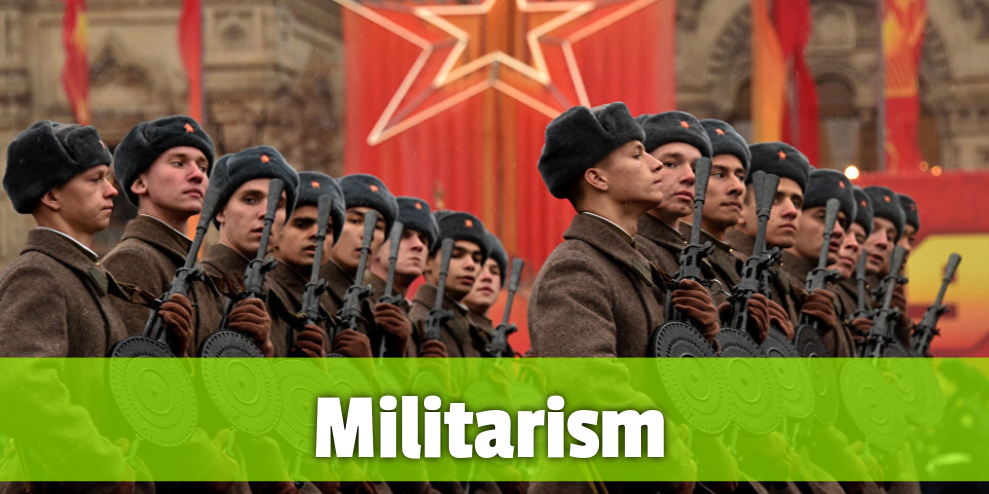
- Tendency towards the subordination of production and of the organization of the state to the needs of war, whether present or future. It therefore manifests itself as an increase in military spending running parallel to the development of the authoritarian character of the state and the militarization of social life.
 Mode of production
- Set of social relations that shape production, make up the economic structure of society and correspond to a definite stage of development of the productive forces.
N
 Nation
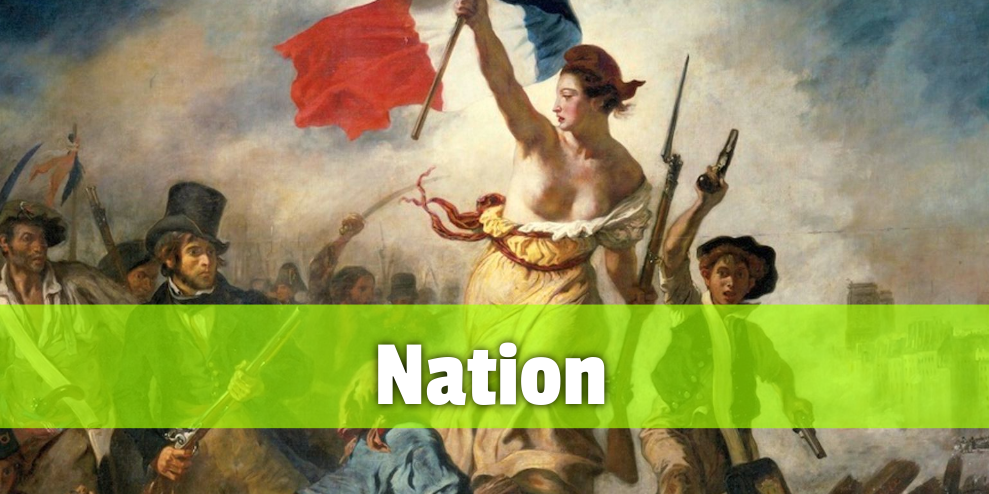
- Name of the social body generated by the bourgeoisie when it effectively leads the whole of society in a given territory. From a materialist point of view the nation emerges in parallel to the constitution of a national market and is oriented towards the consolidation of the power of the bourgeoisie through a national state.
 National and democratic tasks of the bourgeois revolution
- Basic milestones of the bourgeois revolutions that enable the development of national capital and the consolidation of its dominance through a national state of its own.
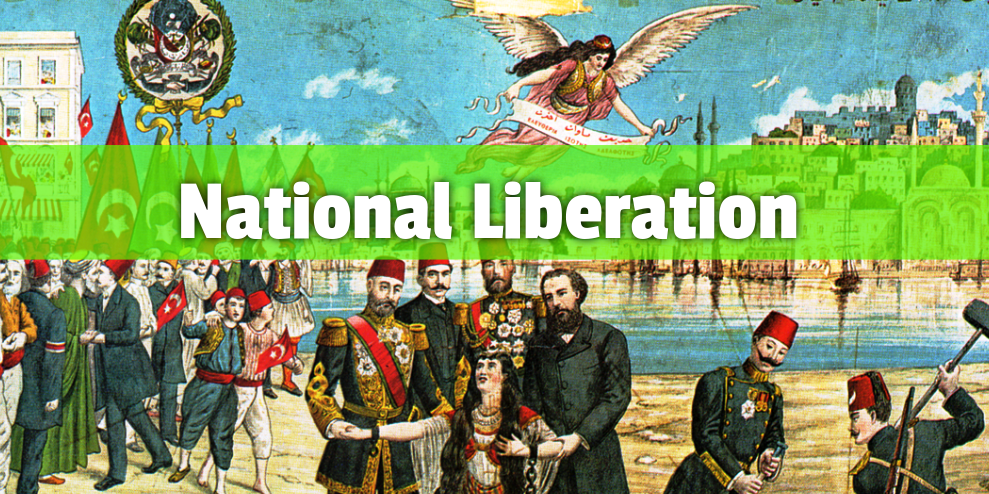 National liberation
- Bourgeois revolution that takes the form of state separation (secession). Historically it occurred as the secession of regions with a distinctive bourgeois development from empires and feudal states, or as a bourgeois reaction against the domination of their territory by an occupier or colonizer.
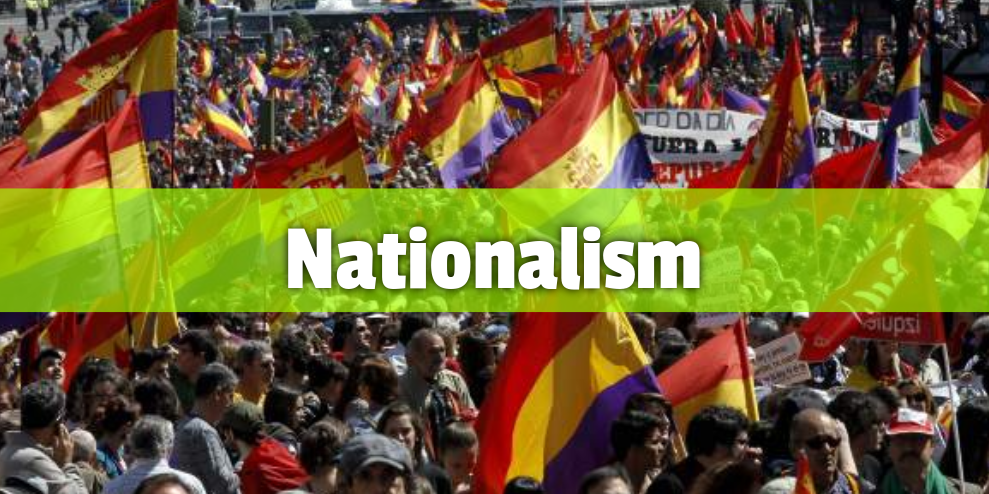 Nationalism
- Political ideology that defines the nation as a historical and political subject above the social classes, which would be reduced to components of the nation with specific national interests and tasks, that is, with their own interests and duties in the "common goal" of the prosperity of national capital.
O
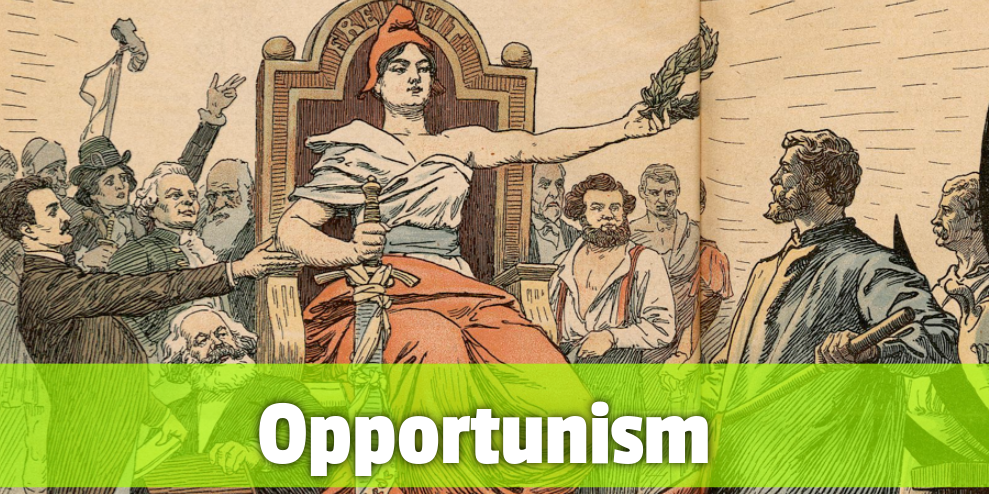 Opportunism
- A slide within the working class political camp toward positions that, while in their formulation and literalness do not call into question the communist program, in practice weaken it in the name of short-term needs or opportunities, of tactical opportunities, of the difficulty of the program to be understood or of potential contingent advances.
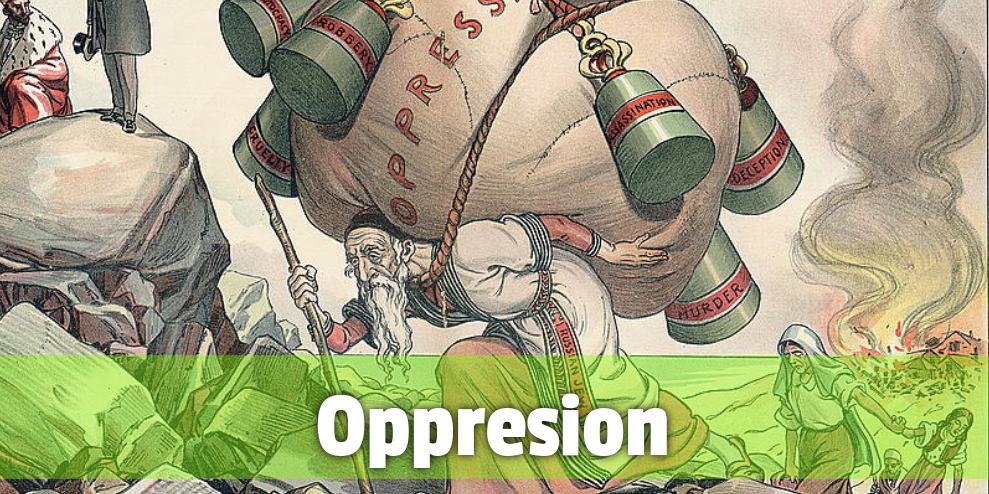 Oppression
- Pressure, force or violence exercised to prevent the political expression of a collective subject.
 Organic composition of capital
- Relationship between constant and variable capital advanced by the capitalists. It measures the relative weight of what the capitalists advance in machinery with respect to what they advance in wages.
P
 Pacifism
- An ideology that defines "peace" as a totalizing social objective above the interests of the classes that make up society.
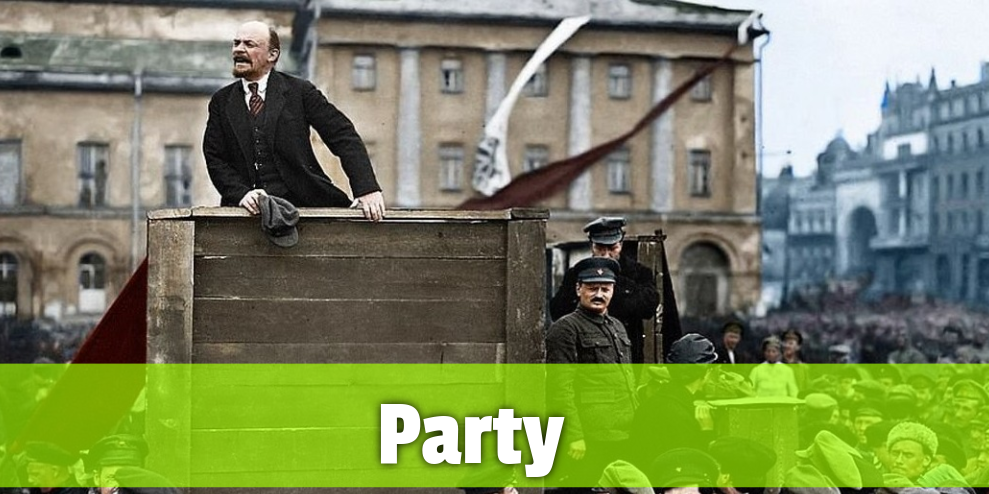 Party
Party- The most conscious and politically organized fraction of the working class, which exercises over it an effective task of political guidance and direction.
 Pauperization
- Tendency towards the mass impoverishment of the non-bourgeois layers of society, and in particular of the workers, through the increase of exploitation in absolute terms, unemployment, the general precarization of living and working conditions, and war.
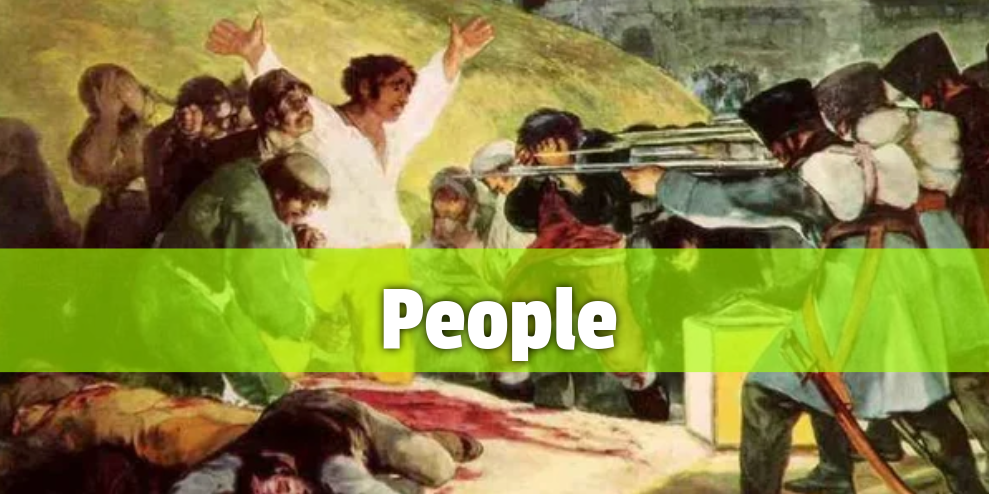 People
- The name given to the social body formed by the oppressed classes of bourgeois society when it is effectively led by the petty bourgeoisie.
 Permanent revolution
- Revolution in which the proletariat comes to political power under the program of the bourgeois-democratic revolution, setting its own objectives from then on and transforming the bourgeois-democratic revolution into a socialist one.
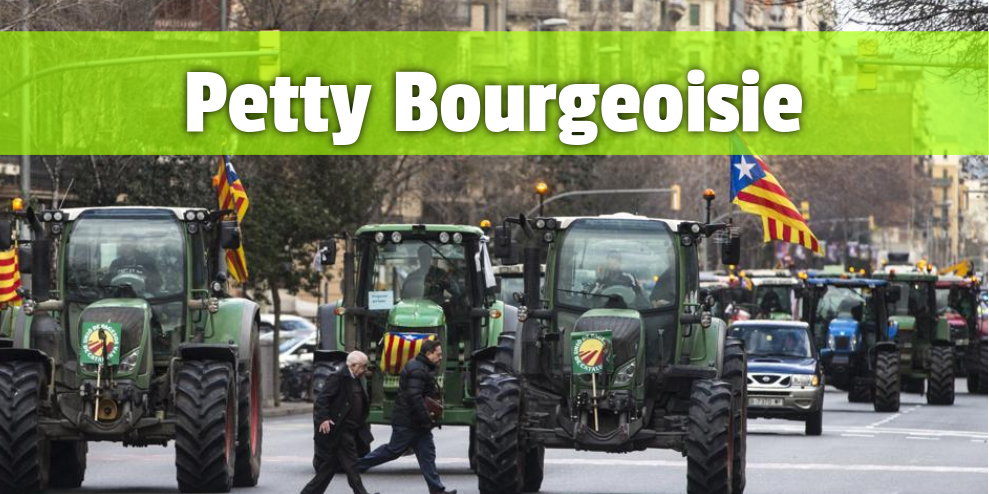 Petty bourgeoisie
- An intermediate stratum of capitalist society that participates in the exploitation of labor but permanently faces the effects of the concentration of capital, trying to avoid its own proletarianization.
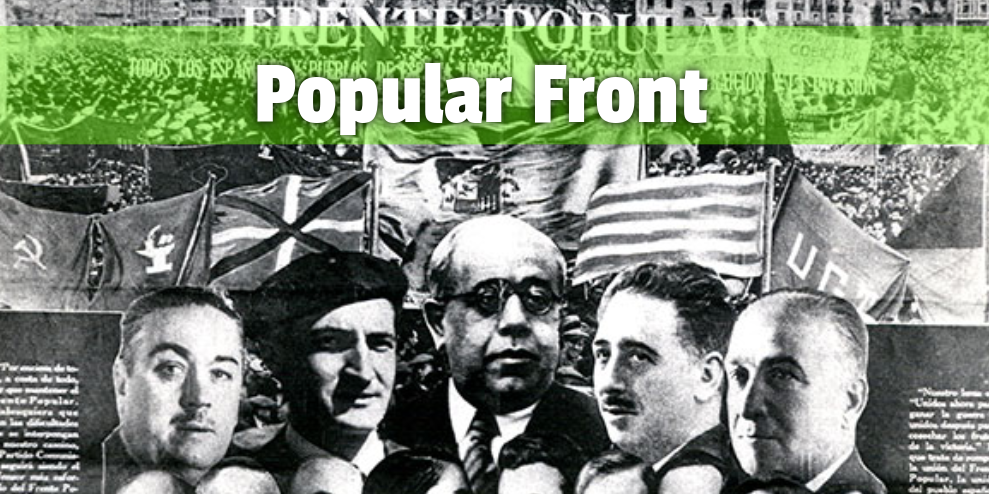 Popular front
- Stalinist tactic proclaimed at the 7th Congress of the Comintern. It presented the formation of electoral alliances with the democratic parties and, eventually, the formation of a government by them, as the way to defeat the counter-revolution in its fascist form.
 Precarization
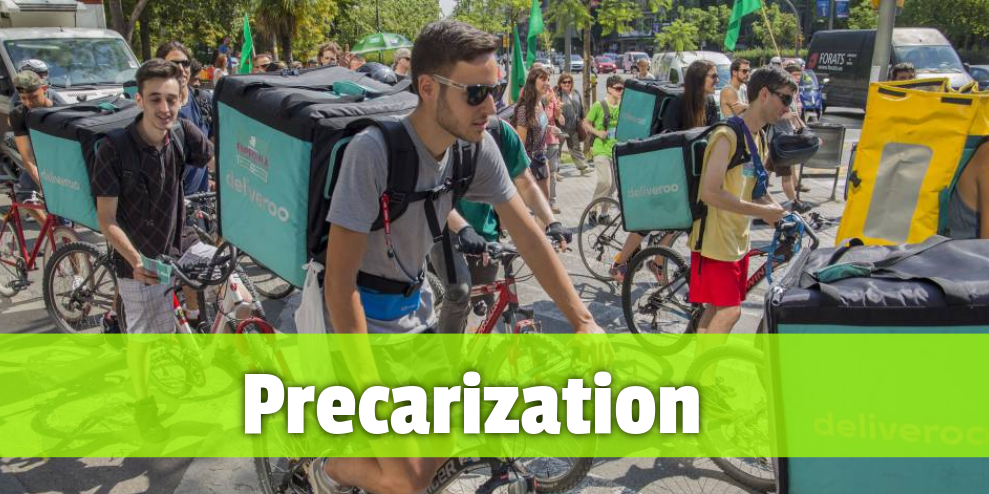
- Precarization is the global tendency towards the development of exploitation in absolute terms through a reorganization and restructuring of the organization of labor that decouples the worker from stable workplaces and work teams, basic services, employment expectations and stable income.
 Primitive communism
- Mode of production prior to the splitting of society into classes, under which Humanity lived for more than half a million years. Although for most of this period human communities fed themselves by hunting, fishing and gathering, primitive communism discovered agriculture, brought about the first sedentarization and gave life to large cities for centuries.
 Productive forces
- Set of material forces that allow the transformation of Nature by the human species within the framework of a given mode of production. The main productive forces are always human labor and knowledge embodied in means of production through technology.
 Progress
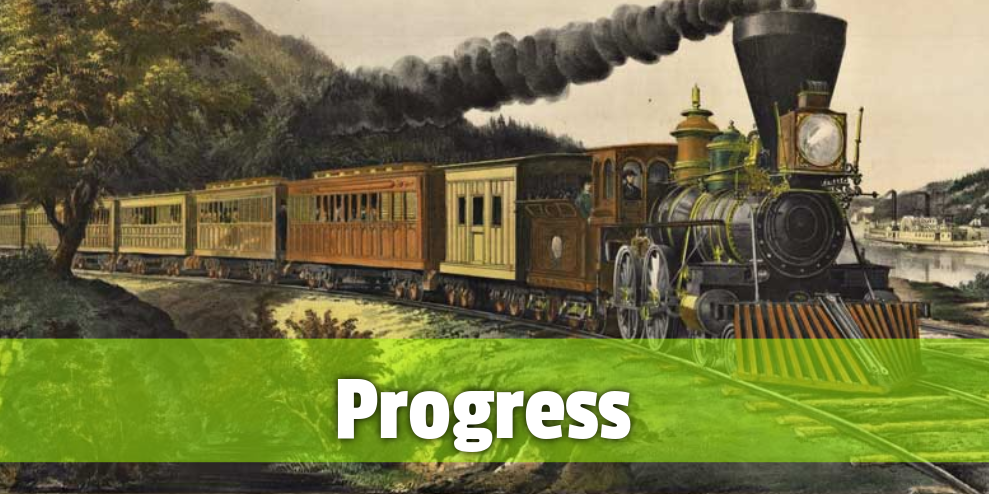
- Progress is everything that contributes on a historical level to the development of the productive forces, laying the foundations of the material possibility of overcoming class society through a society of abundance, without classes and therefore without a state, transforming the "economy" into a conscious and collective metabolism between Nature and the human species.
 Proletarianization
- Originally this was the process of transforming independent producers into wage-earning producers of surplus value. It was later expanded to include the integration into the proletariat of the middle strata of bourgeois society.
 Proletariat
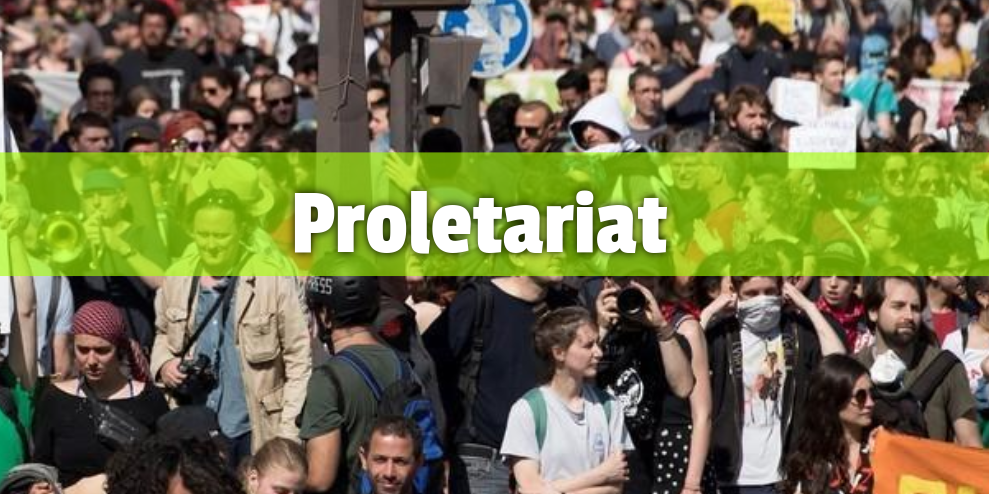
- The proletariat is the characteristic working class of the capitalist mode of production. Because of its place in it -producing surplus value through its collective labor- it is at the same time an exploited, universal and revolutionary class.
R
 Rate of profit
- Relationship between the surplus value produced and the total capital advanced by the capitalist.
 Rate of surplus value
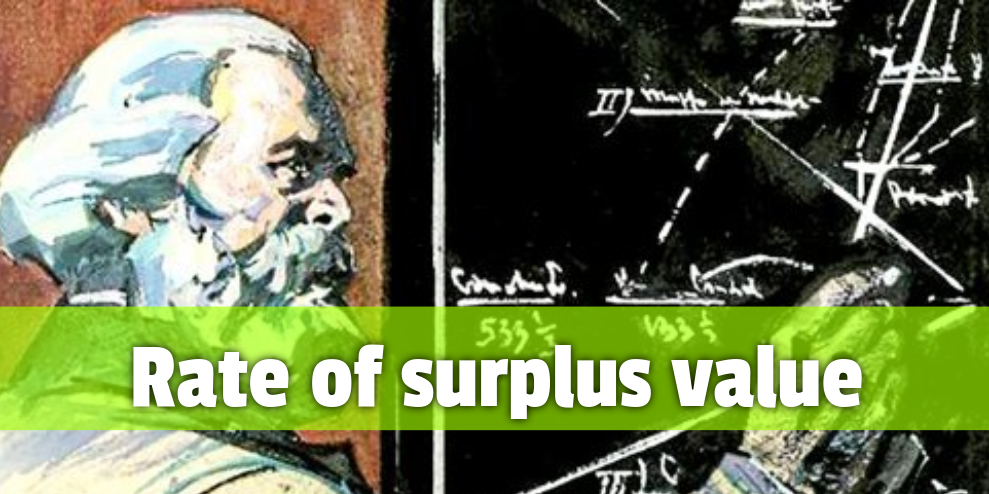
- Ratio between the surplus value obtained and the variable capital used in the production process.
 Reformism
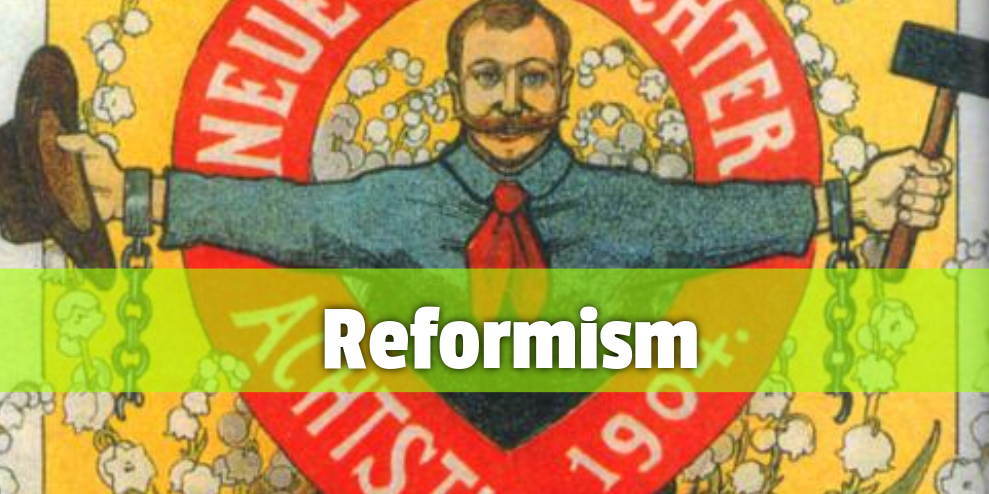
- An opportunist current that developed within the Second International, which held that through the struggle for lasting improvements and reforms -which were still possible- socialism could be achieved without going through a revolution.
 Relative surplus value
- Amount of surplus value extracted from labor power per unit of time. The increase in surplus value in relative terms, that is, in the rate of surplus value, comes about through the increase in labor productivity associated with technical improvements and the increase in invested capital.
 Religion
- A set of beliefs, rites and ceremonies that, through the promotion of a series of values, asserts and maintains the morality characteristic of a given social organization.
 Revisionism
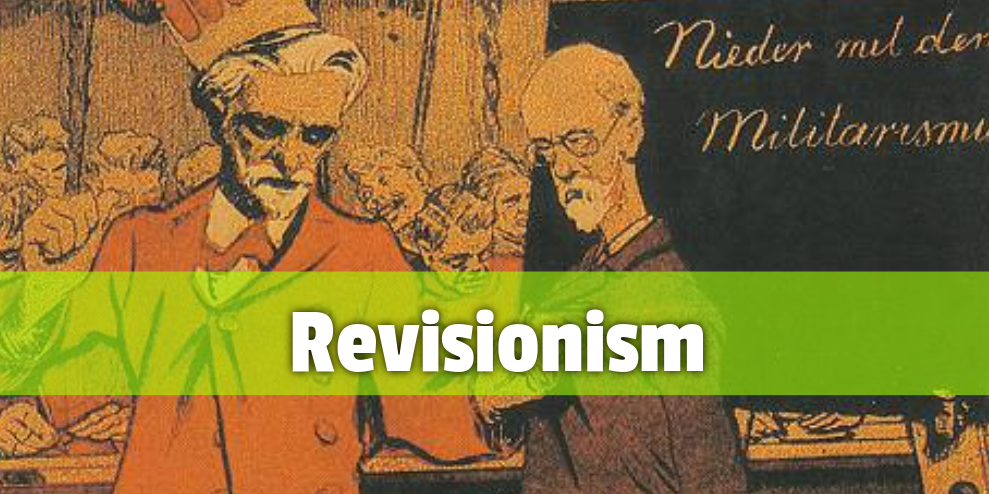
- Theoretical position that appeared within the Second International, which held that capitalism had overcome or was overcoming its own contradictions, so that it was imperative to carry out a "revision" of the Marxist foundations, renounce the revolutionary perspective and redefine the socialist parties as democratic parties defending social reforms.
 Revolutionary defeatism
- A tactic that is the only possible internationalist response to any war or conflict between two bourgeois or bureaucratic factions in the decadence of capitalism. It consists of the denunciation of both sides ("the enemy is in your own country") and the corresponding call to turn the war into revolutionary civil war, that is, into class war ("war on war").
 Right to self-determination
- A right to which the bourgeoisie or petty bourgeoisie of a territory within a state would supposedly be entitled: that of submitting the formation of an independent state to a referendum among the whole population, or the part of it considered "co-national".
 Rising capitalism
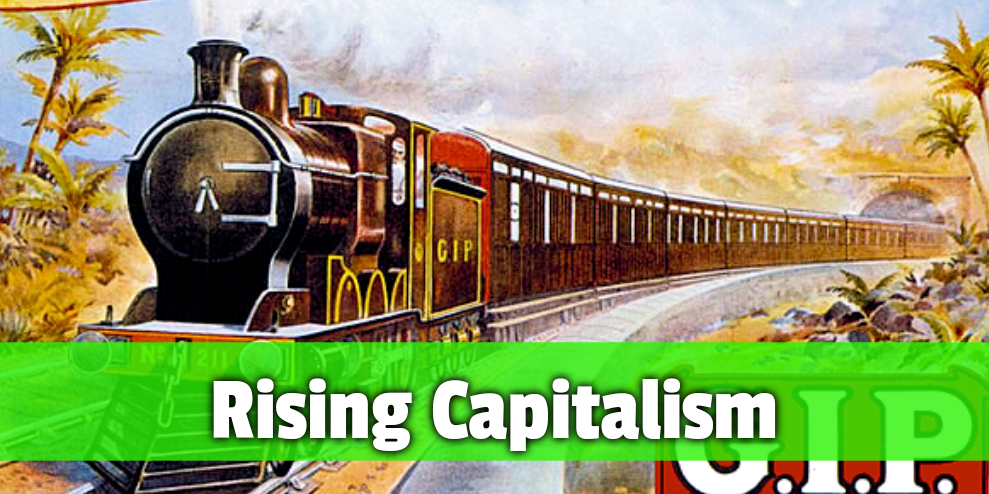
- Historical period during which the capitalist relations of production served the free development of the productive forces of Humanity. This is the period in which the world market and the global systems of communications and transport were born, the productivity of almost all factors multiplied, the global population grew as never before, and a universal class appeared... the proletariat.
S
 Sectarianism
- Organizational tendency that puts the particular interests and achievements of an organization above the general interests of the class movement and its historical perspective.
 Semicolonial countries
- Formally and legally independent states whose national capitals are nevertheless valorized on the basis of one or two primary export industries. The state acts as a redistributor of profits within the national capital, ensuring demand for the rest of the productive sectors, which necessarily play a subordinate role.
 Slave-owning mode of production
- Slave-owning mode of production or slavery. Mode of production based on the physical ownership of most of the labor force by the exploiting class within the framework of an economy which is only very partially commodified.
 Socialism
- Transitional phase between the seizure of power by the proletariat and the total decommodification of production. In it the economy, managed collectively by the workers themselves, is oriented towards decommodification, direct production according to needs and the increase in the productivity of the factors, especially of labor. It measures its success by the reduction of the working day, the increase in working-class consumption and the radical transformation of culture characteristic of a society that has resumed development.
 Socialism in one country
- A political doctrine and practice born as a banner of counter-revolution in Russia, which asserted that a world revolution was not necessary to "build" socialism and that the Russian state, rechristened the "socialist fatherland", was the main conquest of the universal proletariat.
 Soviet
- Committees, commissions, workers' councils or "soviets" are bodies of delegates elected directly by the workers' assemblies, accountable exclusively to them and revocable at any moment. They are born from the extension of the mass strike and, as the struggles develop, they tend to become the form of organization of the class as a whole as the "party" of bourgeois society; that is, they assert a "dual power" that prepares them to become the organ through which the class will exercise its "dictatorship". They then become a real "transitional state" which, as the revolution becomes global, will be able to undertake the decommodification of society.
 Spanish Communist Left
- Internationalist organization founded in Liège in 1930 that would regroup the founding current of the Spanish Communist Party (PCE in Spanish) of 1920 and would join the International Left Opposition as its Spanish section. It would inspire the communist lefts of Argentina, Uruguay and Chile.
 Stalinism
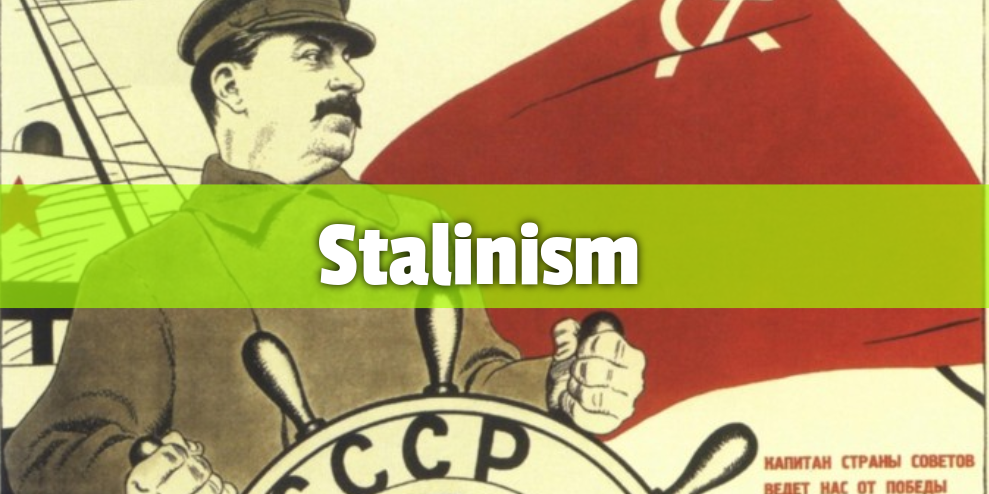
- The ideological form taken by the consolidation of the counter-revolution in Russia, from where it spread through the subjugation and instrumentalization of the Third International from its Fifth Congress onwards and through Russian imperialist expansion from the 1940s. Its main characteristic is the identification as "socialism" of a state capitalism based on the party-state fusion and the affirmation of a state-run, centralized and militarized organization of production. Although Stalinism takes particular forms in different countries and generates different currents serving and depending on the origins of different state bourgeoisies (Maoism, Hoxhaism, Castroism, etc.), they all share the exaltation of wage labor and an open nationalism, completed depending on the case by anti-Semitic, xenophobic or openly racist tendencies, an obscurantist culture and a retrograde sexual morality.
 State
State- The state is a social apparatus that appears with the division into classes in order to keep society constrained within the prevailing social relations, preventing it from collapsing as a result of the class struggle. It is therefore fundamentally conservative and will present itself as "neutral", above the classes in conflict, although it cannot be anything other than a tool of the oppression and exploitation of one class by another.
 State capitalism
- The form that the organization of capital takes in decadent capitalism. It materializes the concentration of finance capital - the union of banking and industrial capital - and the monopolies within and around the state. Socially it promotes the integration of the remnants of the former exploiting classes with the bourgeoisie and the state bureaucracy. Politically it is based on the end of civil society and the integration of broad layers of the petty bourgeoisie as middle cadre in the state apparatus and big business.
 Surplus labor
- Time of use of labor power that exceeds the time needed to produce the value equivalent to its cost of reproduction.
 Surplus value
- Difference between the overall value generated by labor power and the value of labor power itself, that is, the social cost of its reproduction in a quality and quantity similar to that used.
T
 To cupellate
- To define oneself in the critique of the historical class experience until gaining the necessary clarity to adopt clear-cut political positions and defend them without equivocation.
 Trade union
- Wholesaler of the sale of labor power, originally created by the workers themselves to defend their working conditions within a framework of class conciliation and of affirmation of their own existence within the institutions of the national state. With the monopolistic development of national capital and the universalization of state capitalism, the trade union is recognized as one more monopolist and, like all of them, absorbed into the structures of the national state.
 Tragedy of the commons
- Neo-Malthusian argument used to argue the supposedly unsustainable character of communal property and, more generally, of the non-market organization of production.
 Trotskyism
- A derogatory name given by stalinism to the Left Opposition in Russia, the current that led the resistance to the counter-revolutionary drift of the Bolshevik party until 1928 and that, from that date onwards, brought together the great majority of the International Communist Left. Stalinism later applied it to the whole Communist Left and its offshoots, regardless of their political content and of whether they are inside or outside the class terrain.
U
 United Front
- A tactic affirmed at the 3rd Congress of the Communist International that sought to generate slogans capable of mobilizing the masses that still remained embedded in the trade unions and social democratic political parties – organizations committed to the defense of the state and the capitalist order.
 Utopia
- An imaginary plan of social reorganization, outside the dynamics and social forces actually present, which is proposed as a universal solution if imposed on reality.
V
 Value
Value- The value of social production is the product of the total amount of labor exploited in the economic system. Although it is impossible to calculate the value of an individual commodity without taking into account the capital market and the existence of an effective demand for it, its value will tend toward the amount of labor socially necessary for its production.
W
 Wage
Wage- Part of total production with which capital buys labor power and which tends to equal the social cost of reproducing it with the necessary skill and knowledge required in production.
 Wage labor
- Form taken by the vast majority of social labor under capitalism.
Z
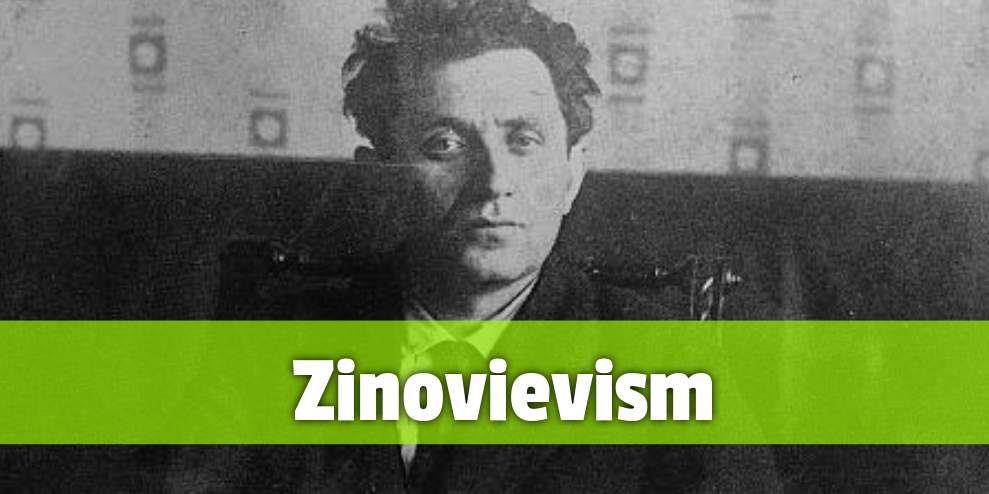 Zinovievism
- Centrist current that between 1924 and 1929, under the leadership of Grigory Zinoviev, paved the way for the destruction of the International and its sections with the organizational policies of "bolshevization" and "proletarianization" within the framework of the "class against class" tactic, which denied the need for transitional objectives in class struggles.
No term matches your search.